READ. MARK. REFLECT.
Study Jesus the Christ
with room for your thoughts.
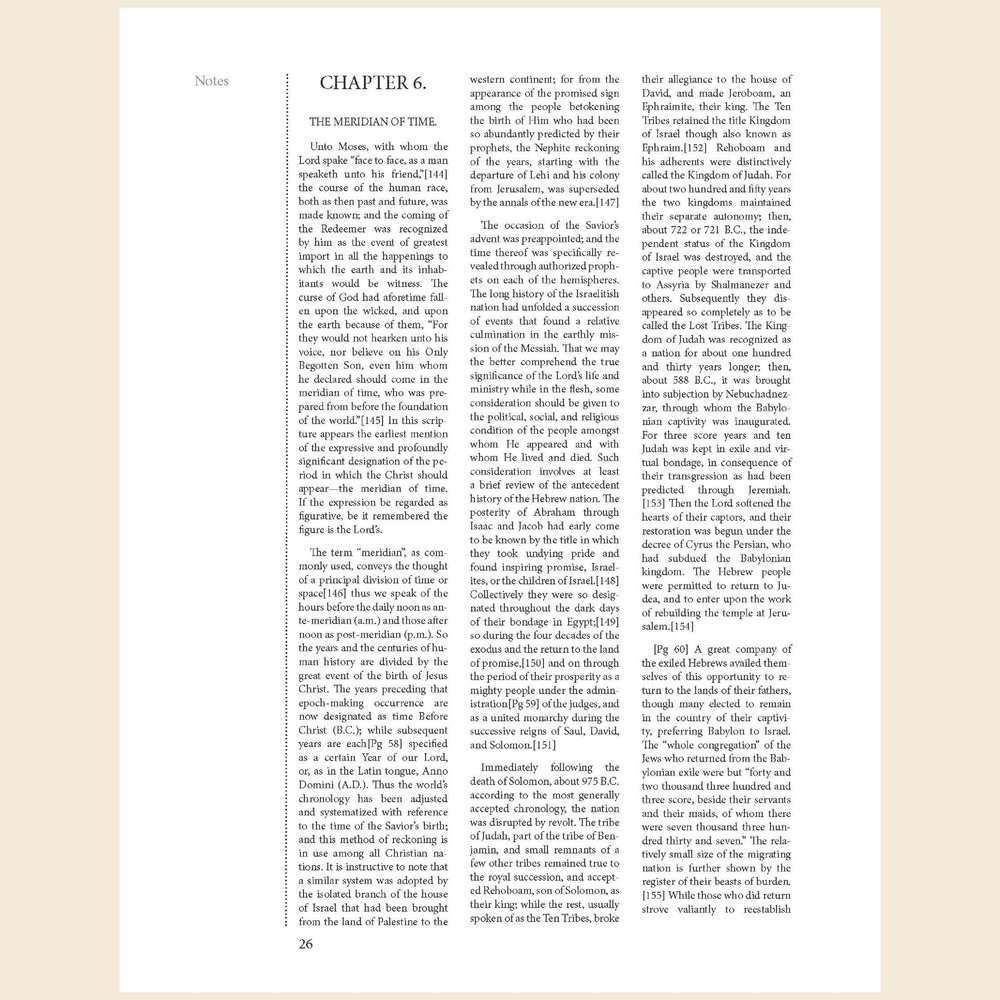
Highlight a passage. Circle a word you want to understand. Write a question beside the paragraph that prompted it. This wide-margin edition gives your study a place on the page, so you can return to both Talmage’s text and your own thinking.
A layout for active reading
The three-column text layout and generous outside notes margin bring reading and writing together. Keep short marks in the text and use the margin for explanations, scripture references and reflections. Original pagination markers remain within the text to help you follow historical page references in the new layout.
Mark it up like a seminary study copy
If you have marked your scriptures in Latter-day Saint seminary, bring that same approach to this edition. Underline, highlight, circle key words, draw connections and write directly in the notes margin. Make it a working study copy that records what you are learning.
Add related snippets and resources beside the passages they illuminate: a short quotation from a talk, a scripture cross-reference, a small map or a printed explanation. Paste or tape a small clipping into the outside margin, or attach a fold-out at one edge so you can lift it to read your notes underneath. Keep the book’s text visible and add the source, speaker or author, date and page or web address.
For example, beside a passage about the Good Samaritan, add a short related excerpt and write why it matters to your reading. For a longer resource, paste in a small reference card with its title and a link or QR code, rather than covering the page. Try a small attachment first and keep inserts light so the book still closes comfortably.
Related study tradition: Seminary and institute guidance on marking and annotating scriptures.
A simple rhythm for each study session
- Read a short section first. Take in the argument or account before deciding what to mark. A few paragraphs may be enough for a thoughtful session.
- Highlight selectively. Choose the sentence or phrase you most want to revisit. Leave enough unmarked text for your highlights to remain useful.
- Circle with a purpose. Mark a repeated word, an unfamiliar term or a phrase that raises a question. Give the mark a brief explanation in the margin.
- Write a note in your own words. Summarize the idea, record a question or connect it with another passage. A short paraphrase gives you something to compare with the text later.
- Return and reflect. At the end of the section, write one takeaway and one question to pursue. On your next visit, add a date or a follow-up beside the original note.
Keep your marks easy to read later
Start with a small system: highlighting for a central idea, a circle for a word to explore and a question mark for something unresolved. If you enjoy color, assign just two or three meanings and write a small key inside the front cover. Consistency matters more than a complicated scheme.
For example, a margin note might read: “What does this word mean here?” or “Compare this explanation with John 10.” If a note relates to a particular sentence, connect it with a small number or a line so the relationship stays clear.
Begin lightly with pencil, and try any pen or highlighter on a small, unobtrusive area before marking extensively. Choose tools based on how they behave on your copy’s paper.
Make room for connections
Use the outside margin to gather scripture references, questions for discussion and connections across chapters. Keep the reference beside the relevant passage, then add a few words explaining why you made the connection. This makes the note useful when the original thought is no longer fresh.
For personal study, finish with a reflection you want to revisit. For a reading group, bring one marked passage and one margin question to discuss. Over time, the book can become a record of the ideas you have explored and the questions you are still considering.
A thoughtful gift for a reader who takes notes
For someone who enjoys close reading, the useful gift is space to make the book their own. This format can suit a reader who likes to underline, compare passages and keep reflections beside the text.
Choose your study copy
James E. Talmage’s 1922 text is available in these large-format Amazon bindings. Choose the binding that fits how you prefer to read and write.
Paperback
8.5 × 11 inches
View Amazon paperbackHardcover
8.25 × 11 inches
View Amazon hardcoverContinue with Talmage
READ NEXT
The Articles of Faith
After studying Christ’s life and mission, broaden your reading with Talmage’s organized explanation of Latter-day Saint belief.
Learn more about the author and explore all five works in this collection.
For his treatment of apostasy and restoration, continue with The Great Apostasy.